

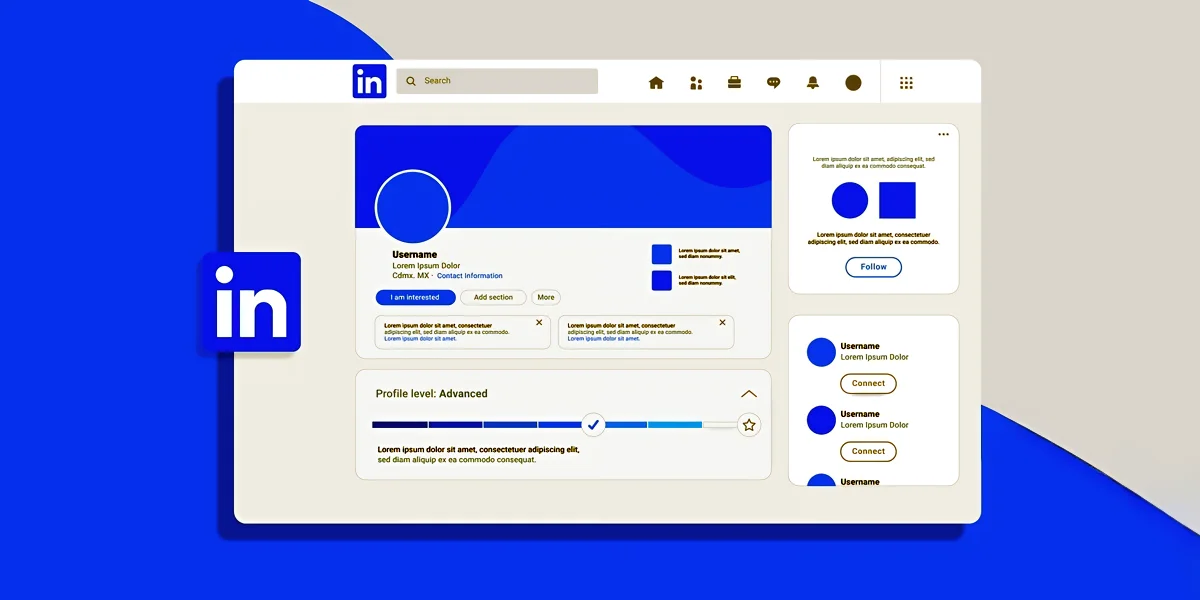
In today's professional landscape, your LinkedIn profile is more than just an online resume—it's your digital professional headquarters. It’s the first place recruiters, potential clients, and industry peers look to understand your expertise, background, and value proposition. A well-optimized profile is crucial for networking, career advancement, and personal branding.
Here is a comprehensive guide on how to build a LinkedIn profile that truly stands out...
1. Set the Foundation: Your Visuals
Your profile photo and banner image are your first impression; make them count.
Professional Profile Photo:
Clarity and Quality: Use a high-resolution, recent photo. Blurry or poorly lit images are a no-go.
Focus: The photo should feature only you, primarily from the shoulders up.
Attire: Wear professional or business-appropriate clothing that matches your industry's standard.
Background: A plain or subtly professional background works best to keep the focus on your face. A profile with a photo can receive up to 21 times more views!
Compelling Cover Photo (Banner):
Use this space strategically. The default blue banner is a missed opportunity.
Your banner can represent your field of expertise, showcase your value proposition, or highlight a major professional accomplishment (e.g., a photo of a project you led or an industry-relevant graphic).
 2. Craft Your Hook: Headline and Custom URL
These two elements are vital for Search Engine Optimization (SEO) and immediate impact.
The Powerful Headline: (Max 220 characters)
Go Beyond Your Job Title: Instead of simply listing your current role, use this space to clearly state your specialty, your value, and your key skills.
Include Keywords: Work in job/industry-specific hard skills and keywords that recruiters search for. For example: "Advertising Sales Rep | Helping clients create winning branding strategies | 900+ successful clients" is much stronger than just "Advertising Sales Representative at XYZ Company."
Your "So What?": Answer the question: What unique value do you bring to the table?
Customize Your URL:
Change the clunky, automatically assigned URL (with numbers) to one that uses your name (e.g.,
linkedin.com/in/yourname). This makes it easy to publicize and looks more professional on a resume or business card.
3. Tell Your Story: The "About" Section (Summary)
This is your opportunity to connect with your audience and share your narrative.
Audience and Optimization: Determine who you are speaking to (recruiters, peers, potential clients) and optimize the summary with relevant keywords.
Structure: Aim for 3–5 short paragraphs, often including a bulleted list for quick readability.
Paragraph 1: Start strong. Who are you and what is your passion/mission in your career?
Paragraph 2: Highlight 2-3 major accomplishments you are proud of, using measurable results.
Bulleted List: List your key skills, areas of expertise, or industries you have experience in.
Final Paragraph/Call-to-Action: Mention your career ambitions or what you are looking for next (e.g., specific roles, collaboration, or networking). Tell the viewer how they can help you or what action to take.
Avoid Buzzwords: Steer clear of vague adjectives like innovative, strategic, driven, or creative. Instead, show these qualities through specific accomplishments and stories.
4. Detail Your Experience and Education
Treat your experience section like an enhanced resume, but with a storytelling lens.
Experience Section:
Quantify Your Achievements: Don't just list responsibilities. Mention specific results and impact using numbers and percentages. For example, instead of "Managed social media," use "Increased engagement by 35% and grew followers by 10k over 12 months."
Storytelling: Briefly explain the context and the key takeaway of each role.
Use Media (Featured Content): Enhance your job entries or your profile generally by adding links to your portfolio, professional videos, articles you've written, or presentations you've given.
Education and Certifications:
Include your major, minor, relevant college activities, study abroad programs, and any honors or awards.
Make sure to list all relevant certifications and licenses, as these are searchable by recruiters.
 5. Leverage the Power of Community
LinkedIn is a networking platform, so engage!
Skills & Endorsements:
List 10-15 hard and soft skills that are relevant to your target role. Focus on hard skills first (e.g., Python, SEO, Financial Modeling).
Ask colleagues and connections to endorse your top skills.
Recommendations:
These are incredibly valuable for building credibility. Actively request recommendations from former managers, colleagues, and clients, and offer to write one in return.
Activity and Engagement:
Post Insightful Content: Share articles, your own thoughts, or professional updates related to your industry.
Comment Thoughtfully: Engage with others' posts by adding value to the discussion, rather than just clicking "Like." This increases your visibility across your network.
Groups: Join active groups in your field to stay updated on industry news and connect with peers.
Final Tip: Consistency and Review
Building a great profile is an ongoing process. Review your profile at least every quarter to ensure it reflects your current professional goals and most recent achievements. A complete, keyword-rich, and engaging profile is the key to unlocking the full potential of LinkedIn.
Read more in our blog...
